Roasted Garlic and Rosemary Sourdough Bread Recipe
Introduction
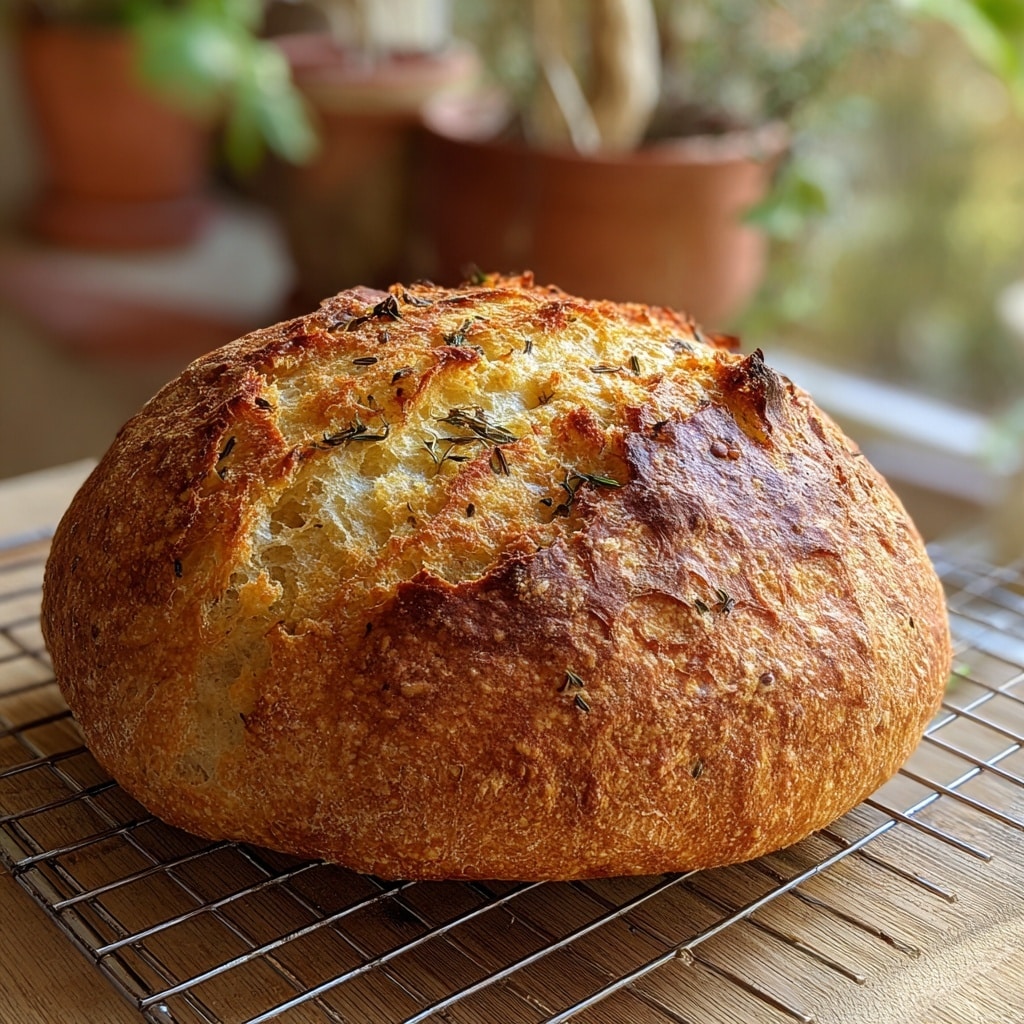
Enjoy the comforting aroma and rich flavors of this Roasted Garlic and Rosemary Sourdough Bread. With tender, tangy crumb and a crispy crust, it’s perfect for sandwiches or simply paired with butter. Homemade sourdough with fragrant herbs makes every slice a delight.
Ingredients
- 1 cup active sourdough starter
- 4 cups bread flour
- 1 ½ cups water
- 2 teaspoons sea salt
- 2 tablespoons roasted garlic (mashed cloves)
- 2 tablespoons fresh rosemary (chopped)
- Olive oil (for brushing crust)
Instructions
- Step 1: Preheat the oven to 400°F (200°C). Slice the top off a whole garlic bulb to expose the cloves, drizzle with olive oil, wrap in foil, and roast for 30-35 minutes until soft and fragrant. Let cool, then squeeze out and gently mash the cloves.
- Step 2: In a large bowl, mix the active sourdough starter with water until dissolved. Add bread flour, sea salt, chopped rosemary, and mashed roasted garlic. Stir to form a rough dough, then knead on a floured surface for 10-12 minutes until smooth and elastic.
- Step 3: Place the dough in a lightly oiled bowl. Cover with a damp cloth or plastic wrap and ferment at room temperature for 4 to 6 hours until doubled in size. Perform stretch and folds every hour to strengthen the gluten.
- Step 4: Transfer the dough gently onto a floured surface. Shape into a tight boule or batard and place seam-side up in a well-floured banneton or bowl lined with a towel.
- Step 5: Cover the shaped dough and proof at room temperature for 2-3 hours or refrigerate overnight for a slower rise and enhanced flavor.
- Step 6: Preheat the oven to 450°F (230°C) with a Dutch oven or heavy pot inside. Carefully transfer the dough on parchment paper into the pot, score the top with a sharp blade, cover, and bake for 20 minutes.
- Step 7: Remove the lid and bake for another 20-25 minutes until the bread is golden and crusty.
- Step 8: Let the bread cool completely on a wire rack to set the crumb before slicing.
Tips & Variations
- Use fresh rosemary for the best flavor, but dried rosemary can substitute if finely chopped.
- For extra crustiness, brush the loaf with olive oil before baking and spritz the oven with water to create steam.
- Experiment with adding other herbs like thyme or oregano for different flavors.
- If you don’t have a Dutch oven, bake on a preheated baking stone and place a pan of water in the oven to maintain moisture.
Storage
Store the bread in a paper bag or wrapped loosely in a kitchen towel at room temperature for up to 3 days. To keep longer, slice and freeze the bread; toast slices directly from the freezer for best results. Avoid refrigerating as it can dry out the bread.
How to Serve
Serve this delicious recipe with your favorite sides.
FAQs
Can I use store-bought yeast instead of sourdough starter?
This recipe relies on the natural fermentation from the sourdough starter for flavor and texture. While you can substitute yeast, you’ll need to adjust the quantities and fermentation times accordingly.
How do I know when the bread is fully baked?
The bread is done when it has a deep golden crust and sounds hollow when tapped on the bottom. An internal temperature of around 210°F (99°C) indicates it’s fully baked.
PrintRoasted Garlic and Rosemary Sourdough Bread Recipe

This Roasted Garlic and Rosemary Sourdough Bread combines the tangy depth of traditional sourdough with the rich, fragrant flavors of roasted garlic and fresh rosemary. The bread features a crisp, golden crust and a tender, chewy crumb, making it an irresistible artisan loaf perfect for sandwiches, toasts, or as a flavorful accompaniment to any meal.
- Prep Time: 15 minutes
- Cook Time: 45-50 minutes
- Total Time: 6 to 9 hours (including fermentation and proofing; or up to 24 hours if refrigerated overnight)
- Yield: 1 loaf (about 1.5 to 2 pounds) 1x
- Category: Bread
- Method: Baking
- Cuisine: Artisan, European
- Diet: Vegetarian
Ingredients
Sourdough Starter and Dough
- 1 cup active sourdough starter
- 4 cups bread flour
- 1 ½ cups water
- 2 teaspoons sea salt
- 2 tablespoons roasted garlic (mashed cloves)
- 2 tablespoons fresh rosemary (chopped)
For Roasting Garlic and Finishing
- 1 whole garlic bulb (for roasting)
- Olive oil (for drizzling and brushing crust)
Instructions
- Prepare the Roasted Garlic: Preheat your oven to 400°F (200°C). Slice the top off a whole garlic bulb to expose the cloves. Drizzle the exposed cloves with olive oil, then wrap the bulb tightly in foil. Roast in the oven for 30-35 minutes until the garlic cloves are soft and fragrant. Remove from the oven and allow to cool before squeezing out and mashing the roasted cloves gently.
- Mix the Dough: In a large mixing bowl, combine the active sourdough starter with water and stir until fully dissolved. Add the bread flour, sea salt, chopped fresh rosemary, and the mashed roasted garlic. Stir all ingredients together until a rough dough forms, then knead on a lightly floured surface for 10-12 minutes until the dough is smooth and elastic.
- Bulk Fermentation: Place the kneaded dough into a lightly oiled bowl, cover it with a damp cloth or plastic wrap, and let it ferment at room temperature for 4 to 6 hours. During this time, perform stretch and folds every hour to strengthen the gluten network and promote good dough structure. The dough should double in size by the end of this period.
- Shape the Loaf: Gently transfer the fermented dough onto a floured surface and shape it into a tight boule (round) or batard (oval). Place the shaped dough seam-side up into a well-floured banneton basket or a bowl lined with a floured towel to help maintain its shape during proofing.
- Final Proof: Cover the shaped dough and allow it to proof at room temperature for 2-3 hours until puffy, or alternatively refrigerate overnight for a slower rise which enhances flavor and texture.
- Bake the Bread: Preheat your oven to 450°F (230°C) and place a Dutch oven or heavy baking pot inside to heat. Once heated, carefully transfer the proofed dough, along with the parchment paper it rests on, into the Dutch oven. Score the top of the dough using a sharp blade to allow controlled expansion. Cover with the lid and bake for 20 minutes. Then remove the lid to allow the crust to brown and bake for an additional 20-25 minutes until the crust is deeply golden and crisp.
- Cool Before Slicing: Remove the bread from the oven and transfer it to a wire rack. Allow it to cool completely before slicing so the crumb sets properly, ensuring a perfect texture and sliceability.
Notes
- Using a Dutch oven to bake helps simulate steam in the oven, which creates a crustier bread.
- Refrigerating the dough overnight during final proof develops deeper flavors and improves texture.
- Ensure your sourdough starter is active and bubbly for the best rise.
- Adjust hydration slightly if your dough feels too sticky or dry based on flour absorption.
- The roasted garlic adds a mellow sweetness compared to raw garlic’s pungency.
Keywords: sourdough bread, roasted garlic bread, rosemary bread, artisan bread, homemade bread, sourdough recipe